22.08. Ally: Reasons that creatures want to ally with the PCs.
Roll
Result
1
Treasure, either as payment or to retrieve some that’s too difficult to get alone.
2
Following an agenda and the PCs are just right as (unwitting) pawns.
3
Altruism. Exceedingly rare.
4
Boredom. Can’t stay sealed in a dungeon room forever.
5
Deception, planning to betray the party later, either running off with treasure or attacking during a crucial time.
6
Grass looks greener on the side the PCs are on.
7
For incomprehensible or unknowable purposes.
8
Hatred of something else is greater than hatred of the PCs, but power is also weaker. Likely to switch sides during the battle if chances are looking good.
24.08. Reveal: Some truths the PCs might or might not uncover.
Roll
Result
1
The wandering undead horde is not the work of some necromancer, but is instead engineered by a hostile kingdom to weaken the region.
2
The bandits are under the sway of a dryad to keep people away from the forest.
3
The dragon and the sorcerer are working together to complete a strange ritual.
4
The treasure hoard seen from the entrance of the dungeon is in fact not real, but an illusion hiding an especially clever roper.
5
The riddles of the sphinx are impossible to solve because they are just nonsense made up on the spot.
6
The cult appears sinister but is harmless (for now), and is blamed by the region’s ruler to explain away the current inadequacy and incompetence of governance.
The seed word for this post is “challenge” but, rather than come at it literally, I’m going to look at a figurative challenge that I am facing: should attacks in combat always do something? If so, what? I’m going to look at this through the lens of my game, Troupe, but you can probably apply it philosophically to any game you’re playing, unless that one already has never-miss mechanics.
25.08. Challenge: The types of challenges the PCs will generally face.
Roll
Result
1
Monsters: The old classic. Requires no explanation, me thinks.
2
NPCs: Singular, factions, societies. The challenges here ranges from power (magical, military, societal), ambitions (schemes and plans) to relationships (aggravating one might aggravate countless more).
3
Treasure: Might be fake, might be cursed, might be sentient. How to transport it safely, how to keep it safe.
4
Traps: Range from accidental to insidious, obvious to undetectable, mischief to death. Creativity needs to be countered with creativity.
5
Wilderness: Where to go, how to stay on course, how to circumvent dangers.
6
Dungeons: It’s a dungeon, can do anything with that. For example, one could say the dungeon is the real world and anything outside of it is but a dream, thus the challenge is not getting lost in the unreal (maybe that’s more of a challenge for the GM).
The ultimate nemesis in the setting I’m building around Troupe is The Gloom. The Gloom is, in essence, anti-creation. It is the End and seeks the end of all things. Because of the vigilance of the Greater Gods, it cannot act directly in the world. Instead, It constantly presses the boundaries imposed upon it, worming tendrils of influence to twist and corrupt living beings through Despair and Hopelessness.
Using a shorthand to describe how creatures do things, specifically hunting or fighting, helps you run those creatures consistently which, in turn, allows players to learn behaviors and react to them. Here some rough categories that you can apply.
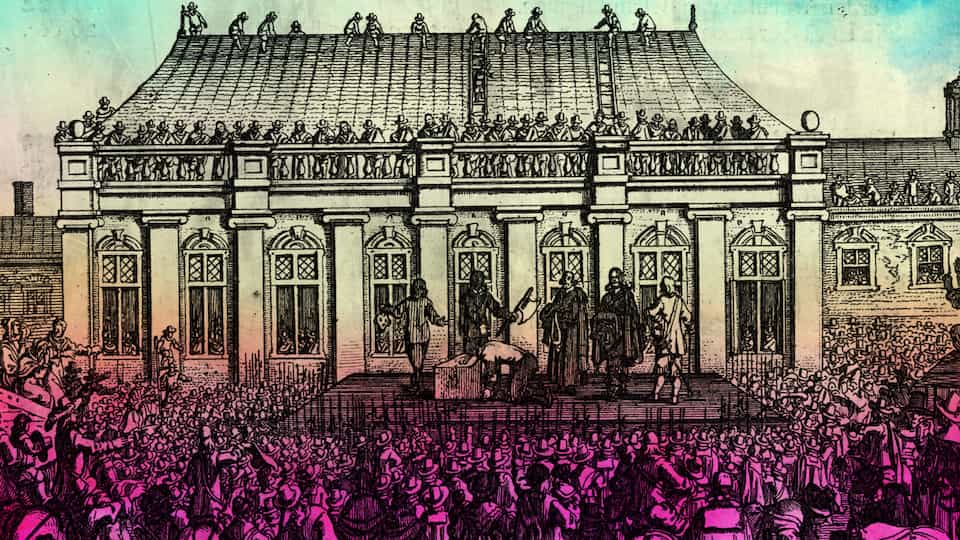
I should have posted this yesterday. The inspirational prompt is “suspense” but I just could not come up with anything from it. “Suspense” comes to English via French from the Latin suspensus which refers to hanging up, making uncertain, and killing by hanging. This last definition is what I’m going to utilize to pivot to… creative executions!
A short follow-up to my earlier potpourri of 1d6 tables because I yet again need to meet some blogging obligations and finish the month strong! In this installment, we’ll roll up some bonds and some alternate methods of gaining experience.
Experience helps you level up but it isn’t and shouldn’t be the only reward for the doing of great things that characters do in a campaign. Looking beyond gear— devices that make numbers go up and render characters more puissant practically— there are other achievements for characters to chase and receive for their deeds.